
Description
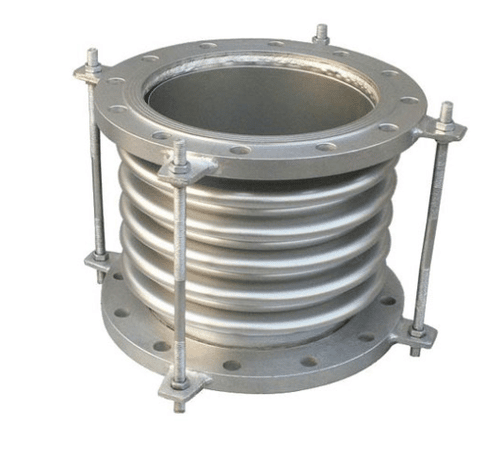
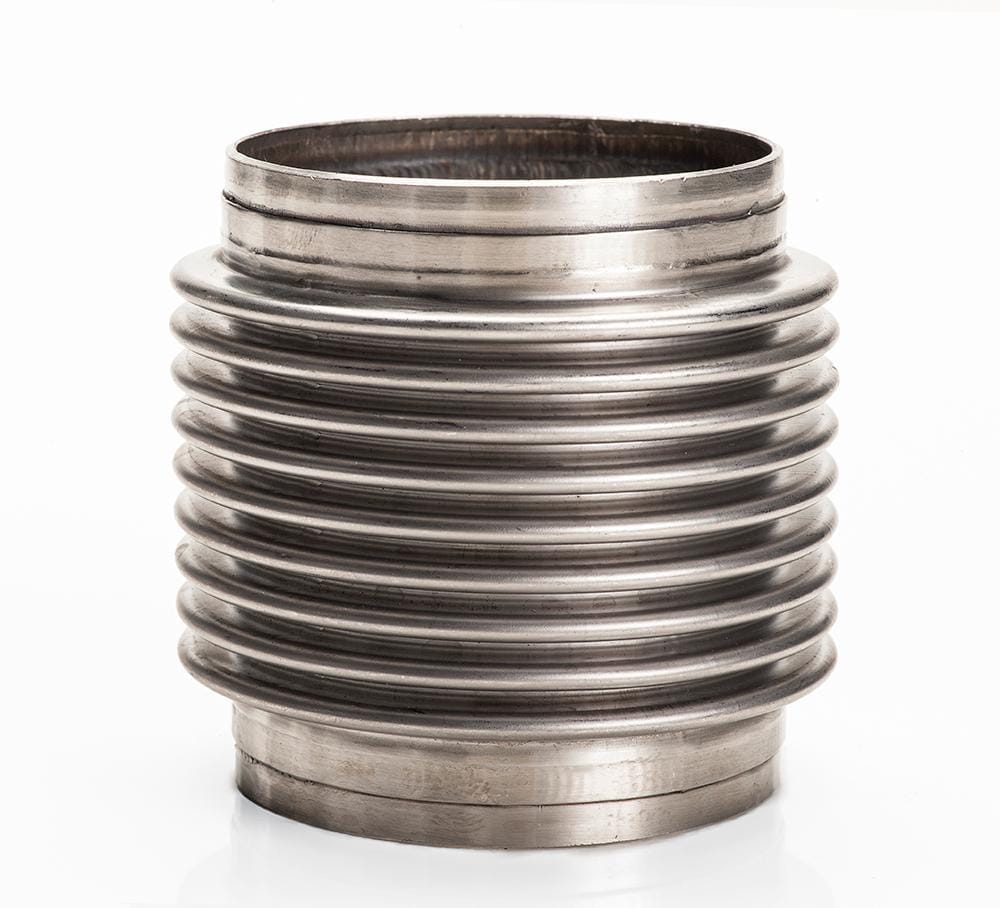
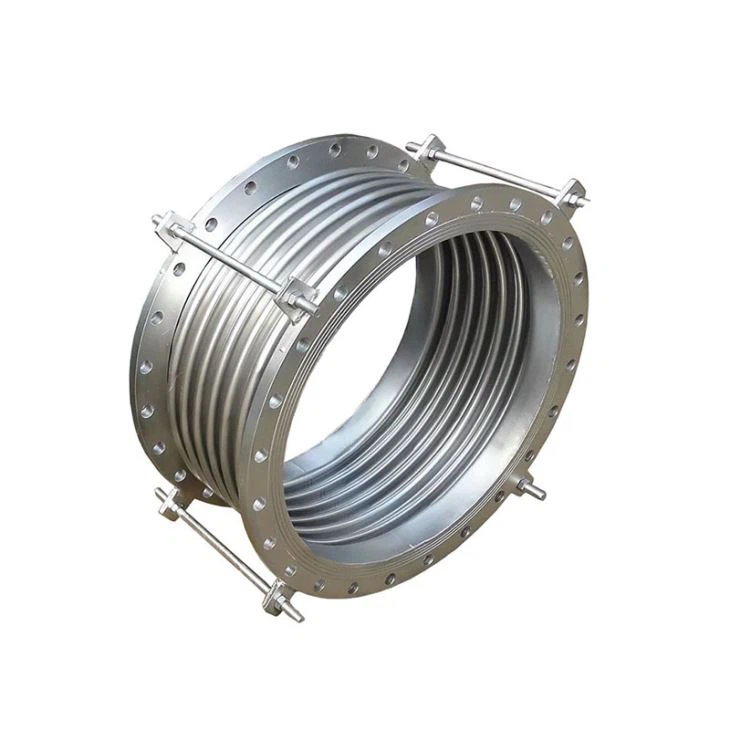
Exhaust bellows are specialized metallic expansion joints designed for diesel generator exhaust systems, engine exhaust pipes and high-temperature gas applications. Manufactured from high-grade stainless steel (321 or 310S), these bellows absorb thermal expansion, engine vibration and misalignment in exhaust systems operating at temperatures up to 650°C and beyond.
Features
- High-temperature stainless steel construction (SS 321, 310S, Inconel)
- Single or multi-ply bellows for pressure containment
- Outer braid or cover for insulation and protection
- Flanged or butt-weld end connections
- Can include flexible pipe sections
- Designed for pulsating exhaust flow
- Corrosion-resistant materials
- Manufactured to EJMA and international standards
Applications
- Diesel generator (DG set) exhaust systems
- Gas generator exhaust connections
- Industrial engine exhaust piping
- Marine engine exhaust systems
- Boiler breechings and flue gas connections
- Turbine exhaust systems
- Incinerator and furnace exhaust
- High-temperature process gas piping
- Emergency generator exhaust in buildings
Technical Specifications
- Material: Stainless Steel 321 (standard), 310S (high temp), Inconel 625 (extreme)
- Temperature: Up to 650°C (SS 321), up to 1000°C (Inconel)
- Pressure: Typically low pressure, up to 0.5 bar in exhaust systems
- Size Range: DN50 (2″) to DN1200 (48″)
- Bellows Type: Single-ply or 2-ply for safety
- End Connections: Fixed flanges, floating flanges or butt-weld
- Outer Protection: Braided SS wire mesh or thermal insulation cover
- Movement: ±15mm to ±50mm axial, ±10mm lateral, ±5° angular
Why Exhaust Systems Need Bellows:
- Thermal Expansion: Exhaust pipes expand significantly (steel expands 12mm per meter at 500°C).
- Engine Vibration: Running engines create substantial vibration requiring flexible connections.
- Misalignment: Building settlement or foundation movement needs compensation.
- Acoustic Isolation: Flexible bellows reduce noise transmission through exhaust piping.
- Stress Relief: Prevents stress on engine exhaust manifold and silencer connections.
Construction Types
- Basic Exhaust Bellow: Stainless steel bellows with flanges, suitable for moderate temperatures.
- Insulated Exhaust Bellow: Bellows with thermal insulation blanket to reduce heat radiation.
- Braided Exhaust Bellow: Outer stainless steel braid protects bellows and improves appearance.
- Flexible Exhaust Pipe: Long corrugated flexible pipe (up to 3 meters) with or without braid.
Design Considerations
- Exhaust gas temperature (peak and average)
- Engine vibration amplitude and frequency
- Thermal expansion of exhaust piping
- Back pressure requirements (low restriction)
- Flange standards (ANSI, DIN, custom)
- Installation space and routing
- Indoor or outdoor installation
- Required service life
Benefits
- Accommodates thermal expansion in hot exhaust systems
- Isolates engine vibration from exhaust piping
- Reduces stress on engine exhaust manifold
- Prevents exhaust system failures and leaks
- Allows flexibility for engine movement
- Reduces noise transmission
- Long service life in high-temperature applications
- Corrosion-resistant stainless steel construction
Quality Assurance
- Material certifications (mill test certificates)
- Pressure testing (if applicable)
- Dimensional inspection
- Visual inspection of welds
- Documentation package with each order
Contact RMS Corporation with engine/generator specifications (kVA rating, exhaust temperature, pipe size, flange type) for exhaust bellow selection and supply.
Q1. What is an exhaust bellow?
An exhaust bellow is a metallic expansion joint installed in an exhaust pipeline to absorb thermal expansion, vibration, and small misalignments between engine, turbocharger, silencer, and stack or ducting. It consists of a flexible corrugated stainless-steel element with flanged or cuffed ends designed for high-temperature exhaust gases.
Q2. Where are RMS exhaust bellows typically used?
RMS exhaust bellows are used on diesel generator sets, engine test beds, marine engines, earthmoving equipment, and industrial exhaust systems to protect connected piping and equipment. They are commonly installed between engine outlet and silencer, between silencer and stack, or at structural movement joints in long exhaust runs.
Q3. Why do I need an exhaust bellow in my DG set exhaust line?
Without a flexible element, thermal expansion and engine vibration can induce high stresses at welds, flanges, and supports, leading to cracks, leaks, and noise problems over time. A properly selected exhaust bellow absorbs axial movement, lateral displacement, and vibration, increasing the life of the exhaust system and connected equipment.
Q4. What information is required to select the correct exhaust bellow?
For correct selection, RMS typically needs engine or DG rating, exhaust pipe size and schedule, operating temperature, approximate exhaust line length, layout (horizontal/vertical runs), and available installation space. If available, sharing an exhaust line sketch and expected movements (thermal expansion or structural) helps in recommending the right bellow size and construction.
Q5. What materials are used for RMS exhaust bellows?
RMS exhaust bellows are generally manufactured from stainless-steel grades suitable for high-temperature exhaust gases, with options such as SS 304 or SS 316 depending on temperature and environment. End connections can be in matching stainless steel or carbon steel depending on the mating pipe or flange specification.
Q6. Can exhaust bellows also reduce exhaust noise?
The primary function is to absorb movement and vibration, but by decoupling engine vibration from rigid piping, exhaust bellows can help reduce structure-borne noise transmitted to building steel and supports. They should be used together with correct silencers and insulation to achieve overall noise control.
Q7. Are exhaust bellows suitable for outdoor or marine environments?
Yes, RMS supplies exhaust bellows for outdoor DG sets and marine applications, with material and construction selected to handle temperature, corrosion exposure, and mechanical loading. For marine and coastal locations, higher-grade stainless steel and appropriate end connections are recommended to improve service life.
Q8. Do exhaust bellows require special supports or guides?
Yes, exhaust bellows should be installed with proper fixed points, hangers, and guides so that thermal movements are directed into the bellow rather than into flanges or equipment nozzles. RMS can guide support placement so that the bellows works within its design movement and the exhaust line remains stable during operation.